
Site Preparation That Prevents Water Problems
Dirt work and grading in Kansas City for properties where improper drainage causes foundation issues, standing water, or erosion damage
Kansas City's clay soil doesn't absorb water quickly, so improper site grading sends runoff toward foundations, creates low spots that hold standing water for days after rain, and channels erosion across driveways and access routes. Proper dirt work establishes the drainage patterns that determine whether your property sheds water safely or develops expensive problems over time. Denton Land Management handles site preparation and grading across residential and commercial properties throughout Kansas City and neighboring areas, shaping terrain so water moves away from structures and critical areas rather than pooling or eroding soil.
The work involves moving, compacting, and sloping soil to create controlled drainage paths that account for clay's behavior during wet conditions. Equipment selection depends on project scale, with precision grading for areas near buildings requiring different techniques than rough grading for large open sites. The process addresses existing drainage failures and prepares new construction sites before foundations or paving begin.
Schedule a property assessment to identify current drainage patterns and discuss grading solutions that prevent water from reaching problem areas.
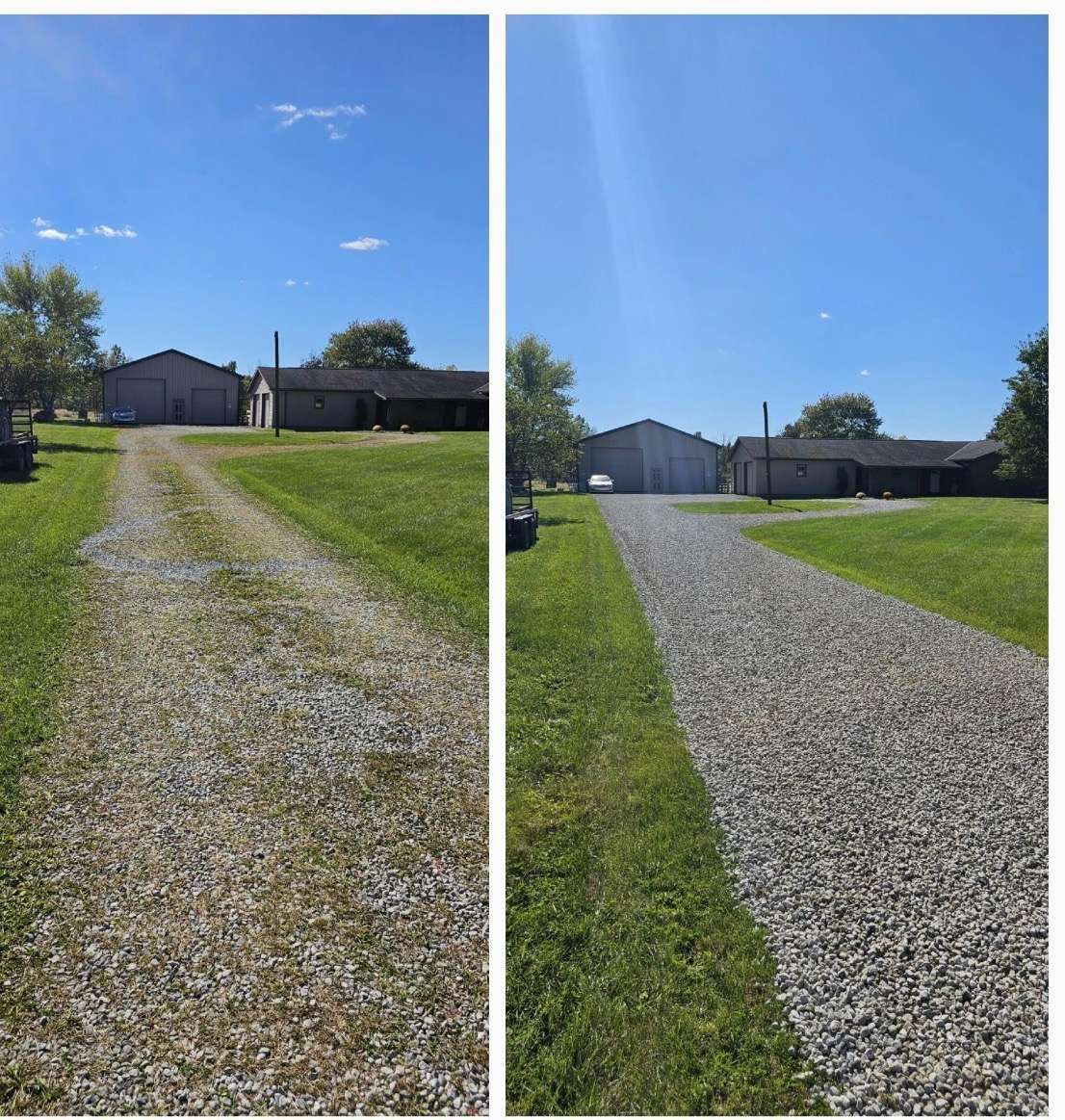
What Proper Grading Requires on Clay Soil
Effective dirt work on Kansas City properties accounts for how clay soil behaves when saturated, which differs significantly from sandy or loamy soils that drain quickly. Grading establishes consistent slopes that move water toward planned drainage points, with compacted fill in areas that would otherwise settle unevenly under structures or paving. Licensed and insured operations use laser levels and grade stakes to maintain precise slopes, typically running two percent minimum grade to ensure positive drainage without creating erosion velocities that wash away topsoil.
After grading work finishes, you'll notice water flowing away from buildings during rain events rather than pooling against foundations. Previously muddy areas firm up because water no longer stands long enough to saturate the soil. Driveways and parking areas drain cleanly instead of developing ruts where vehicles track through standing water, and slopes that previously showed erosion gullies now shed water in controlled sheets across compacted surfaces.
The service includes site preparation for construction, corrective grading around existing buildings, and drainage solutions for problem areas that current grading doesn't address. Work gets scheduled around weather conditions because clay soil can't be properly graded when saturated, and final compaction requires relatively dry conditions to achieve stable density.
Questions Before Starting Site Work
Property owners planning dirt work need clarity about how grading changes their land and what the finished site will look like under various conditions.
What slope percentage does proper drainage require?
Most building perimeters need two to five percent grade sloping away from foundations, which translates to two to five inches of drop per ten feet of horizontal distance, though steeper slopes work for open areas away from structures.
How does Kansas City's clay soil affect grading costs compared to other soil types?
Clay requires more passes with compaction equipment to achieve stable density, and it can't be worked when wet, which sometimes extends project timelines compared to sandier soils that compact easily and tolerate wetter conditions.
What happens if grading reveals existing drainage problems I didn't know about?
Site work often exposes hidden issues like buried debris, unsuitable fill material, or subsurface springs that require additional attention beyond the original grading plan.
When can I use graded areas after work finishes?
Compacted areas can handle light traffic immediately after final grading, though seeding or landscaping typically waits for weather-appropriate planting windows, and heavy construction traffic may require additional compaction depending on equipment weight.
What distinguishes rough grading from finish grading?
Rough grading establishes major slopes and drainage patterns for site development, while finish grading creates precise elevations and smooth surfaces for landscaping, paving, or building placement.
Denton Land Management brings 13 years of experience to dirt work and grading projects across the Kansas City metro, handling both residential and commercial sites where drainage failures create ongoing problems. Call (816) 789-6454 for a free estimate that accounts for your soil conditions and drainage requirements.