
Land Clearing That Leaves Soil Intact
Forestry mulching in Kansas City for properties where topsoil loss would cause erosion or drainage problems
Denton Land Management provides forestry mulching across Kansas City and the surrounding metro, using specialized equipment that grinds brush and vegetation directly into the soil surface rather than scraping it away. You need this service when clearing overgrown property without disturbing the topsoil layer that prevents erosion and maintains natural drainage patterns. The process leaves a protective mulch blanket that holds moisture and stabilizes the ground, which matters considerably on properties with Kansas City's heavy clay soil that compacts and erodes when disturbed by traditional bulldozer clearing.
The work involves running a forestry mulcher across the property, which cuts and grinds standing brush, small trees, and undergrowth into uniform mulch that settles into the existing soil. This approach eliminates hauling costs entirely because nothing leaves your property, and it prevents the soil compaction and rutting that follows when heavy clearing equipment strips topsoil or when trucks haul debris across wet ground.
Schedule a property evaluation to determine how forestry mulching would work for your specific terrain and vegetation density.
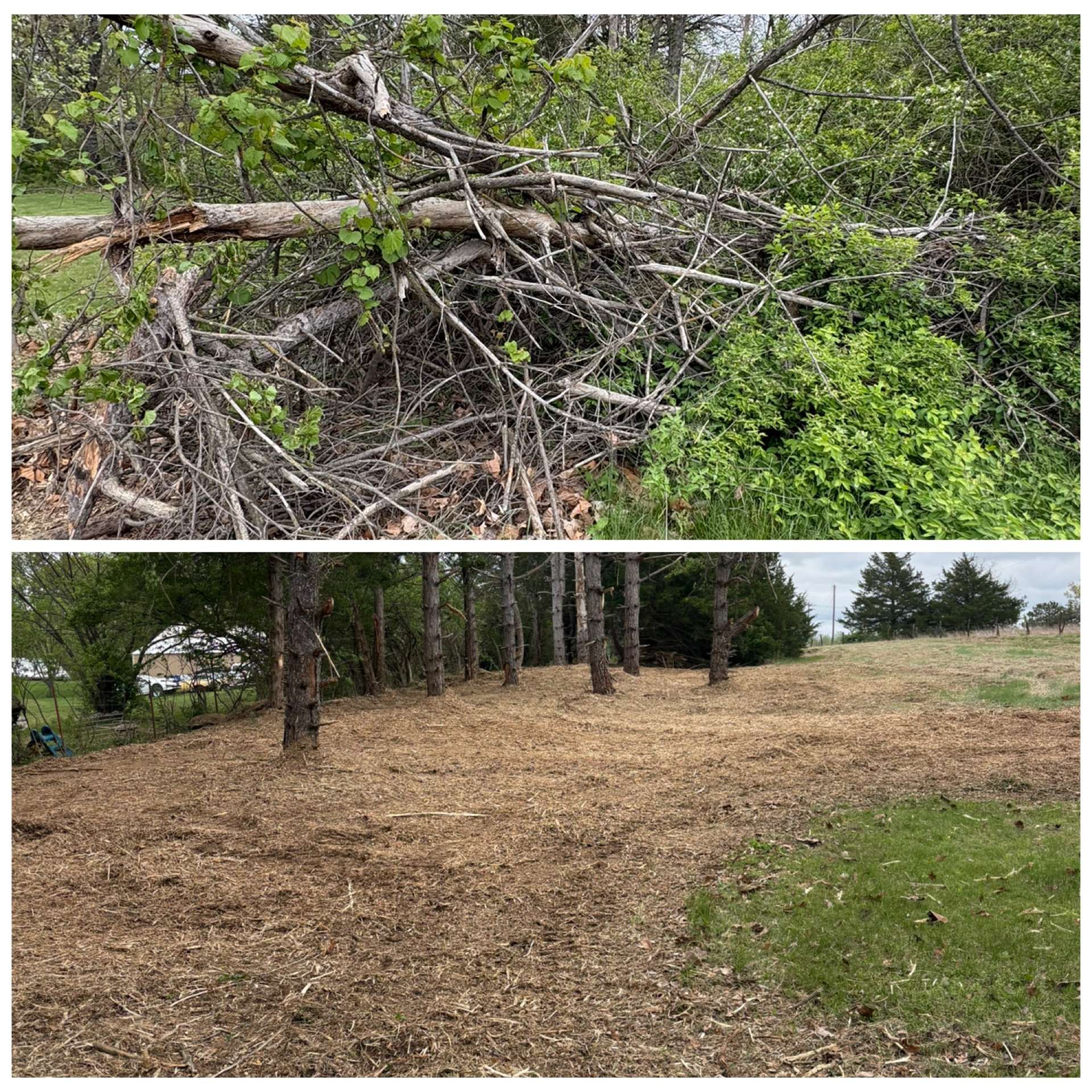
What Forestry Mulching Accomplishes on Your Property
The mulching process converts standing vegetation into a three- to four-inch layer of organic material that decomposes gradually while protecting the soil beneath. Licensed and insured equipment designed specifically for soil preservation cuts through brush at ground level, processes it into consistent chips, and distributes the material evenly across the cleared area. You avoid the disposal fees and fuel costs associated with traditional clearing methods that require loading, hauling, and dumping truckloads of debris at offsite locations.
Once the work finishes, you'll notice cleared sight lines and accessible land without the bare dirt, ruts, or erosion channels that follow conventional bulldozer clearing. The mulch layer holds the topsoil in place during rain events, which matters particularly on sloped properties where clay soil would otherwise wash into low areas or clog drainage paths. Properties cleared this way maintain better moisture retention and show less weed regrowth because the mulch blanket blocks sunlight from reaching dormant seeds.
The method works for properties of any size and handles most brush species common to Missouri, though extremely large hardwood trees may require separate tree service attention. Weather conditions affect scheduling because wet ground limits equipment access, and the work includes only vegetation removal, not grading or dirt work that would change existing drainage patterns.
What Property Owners Ask Before Clearing
Property owners clearing overgrown land for the first time often have practical questions about how the process works and what results to expect. These answers address the concerns that come up most often during project planning.
What happens to the mulched material after clearing?
The mulch remains on your property as a protective ground cover that decomposes naturally over one to two years, enriching the soil rather than requiring removal or disposal at landfills.
How does forestry mulching handle Kansas City's clay soil differently than bulldozers?
The equipment rides on tracks that distribute weight across the surface rather than concentrating pressure like bulldozer blades, so it clears vegetation without gouging the clay layer or creating compacted ruts that hold standing water during Missouri's wet spring seasons.
What size property makes this method cost-effective?
Forestry mulching works for properties of any size because the per-acre cost drops as project size increases, and smaller properties benefit from avoiding minimum fees that debris hauling companies typically charge for truck rentals and disposal.
When should clearing happen to avoid weather delays?
Late fall through early spring offers the most reliable weather windows for clearing work, though dry summer periods also allow access when ground conditions permit equipment operation without causing soil damage.
What equipment specifications matter for soil preservation?
Specialized forestry mulchers use cutting teeth designed to shred rather than tear vegetation, and track systems distribute machine weight across four to six square feet of contact area rather than concentrating pressure under narrow bulldozer blades that sink into soft clay.
Denton Land Management has cleared properties across the Kansas City metro for 13 years, handling projects where soil stability matters as much as vegetation removal. Request a free quote to discuss your specific property conditions and get straightforward pricing for clearing work that maintains the ground you're working to improve.